
Menu

Fountainhead Agro Farms Pvt. Ltd.
Recirculating Aquaculture System Technology by FAFPL
Our Recirculating Aquaculture System (RAS) is the heart of FAFPL’s fish farming technology. We customize it for India’s unique geography, topography, and meteorology. Therefore, it represents a comprehensive and distinctive innovation for indoor fish production. Furthermore, we provide advanced, sustainable, and cost-effective solutions for modern fish-growing needs through our state-of-the-art recirculating aquaculture system. We incorporate Israeli technology into our super-intensive aquaculture production. As a result, we ensure optimal water usage in a land-based, eco-friendly, enclosed, and controlled environment. Consequently, we significantly reduce the risk of disease contamination.
Why Choose a Recirculating Aquaculture System?
RAS offers several advantages over traditional fish farming:
Water Efficiency: Our Recirculatory Aquaculture System requires far less water than conventional systems. Specifically, we recycle most of the water within the system. As a result, we reduce water consumption significantly. Therefore, we can operate in areas where groundwater is limited, including urban locations.
Temperature Control: We control water temperature precisely, a major advantage of our recirculatory aquaculture system. Consequently, we maintain the water at the optimal level at all times. As a result, we achieve year-round fish growth and maximum production output.
Space Utilization: Our recirculatory aquaculture system requires far less surface area than traditional aquaculture. Therefore, it suits locations with limited space, including urban areas. Moreover, we achieve high stocking densities within the system. This allows for highly efficient land use.
Quality Control: Our Recirculatory Aquaculture System enables precise control over water quality. Therefore, we eliminate leaks and manage waste discharge in a controlled manner. Furthermore, we achieve better feed conversion and faster growth due to optimal dissolved oxygen levels.
Technology
What is Recirculating Aquaculture Systems (RAS)?
A Recirculating Aquaculture System (RAS) is a method of fish farming that reuses water within the system. In RAS, we continuously recycle water through the tanks where we keep the fish. We treat this water to remove waste and maintain optimal water quality for the fish. Furthermore, our recirculatory aquaculture system gives us greater control over the aquaculture environment. It also reduces water usage significantly. Therefore, we can implement it in various locations, including urban areas. As a result, it has become an increasingly popular and sustainable approach to fish farming.
Components of a RAS System
A typical Recirculating Aquaculture System (RAS) consists of several key components that work together to maintain water quality and provide a suitable environment for fish farming. These components include:
Growing Tank: The growing tank is the primary enclosure where we raise the fish. We provide a fully controlled environment, including optimal water quality, temperature, and space for healthy fish growth.
Sump/Particulate Removal Device: The sump is a reservoir at the lowest point of the RAS where water collects. It serves as a settling area for solid waste removal. Additionally, we use drum filters or settlement tanks to remove solid waste and particles from the water. As a result, we maintain consistent water quality throughout the system.
Biofilter: The biofilter is a critical component of RAS. It contains beneficial bacteria that convert toxic ammonia and nitrite produced by fish waste into less harmful nitrate through a process called nitrification. This helps maintain water quality and is essential for the health of the fish.
Oxygen Injection with U-Tube Aeration: This component involves injecting oxygen into the water to ensure adequate dissolved oxygen levels for the fish. U-tube aeration is a method of efficiently dissolving oxygen into the water using a U-shaped tube and air stones or diffusers.
Water Circulation Pump: The water circulation pump is responsible for moving water through the RAS, ensuring that water is properly circulated through the filtration system, biofilter, and growing tanks. This helps maintain consistent water quality and oxygen levels throughout the system.
Water Heating System: The water heating system is used to maintain the appropriate water temperature for the specific species of fish being farmed. It ensures that the water remains within the optimal temperature range for fish growth and health.
Ozone and Ultraviolet Sterilization: Ozone and ultraviolet (UV) sterilization are methods used to disinfect and sterilize the water in RAS. Ozone and UV light can help control pathogens, bacteria, and algae, contributing to improved water quality and fish health.
Backup Systems: Backup systems are essential for ensuring the continued operation of the RAS in case of equipment failure or power outages. This may include backup power generators, emergency aeration systems, redundant equipment, and alarms to alert operators of any issues.
The Future of RAS
The future of the Recirculating Aquaculture System shines bright. Technological advances, a surge in eco-friendly aquaculture, and a rising demand for high-quality fish all drive this growth. Specifically, these closed-loop systems offer a precise and resource-efficient fish farming method. Therefore, they minimize environmental footprint, water use, and land requirements. As a result, urban and space-limited areas can now join the aquaculture revolution.
Furthermore, as the global population grows, our Recirculating Aquaculture System offers a sustainable answer to the rising demand for fish. It tackles key concerns such as overfishing, polluted waters, and habitat loss. Ongoing research, automation, and smart monitoring continue to advance RAS technology. Above all, we maintain an unwavering focus on optimal fish health and welfare. Consequently, RAS is set to lead the future of aquaculture — ensuring both food security and environmental sustainability.
With each stride in knowledge,
We’re on the spot when you need us, and We fast
Fresh Water Fish Farming aims to establish intelligent and sustainable mechanisms throughout the aquaculture value chain, ensuring a measurable and limited environmental footprint. This bio-circular-green economy approach will be the cornerstone of our forward and backward integration of processes.
Common Questions
Most Popular Questions
Explore answers to commonly asked questions about Murral Fish(Fresh Water Fish Farming).
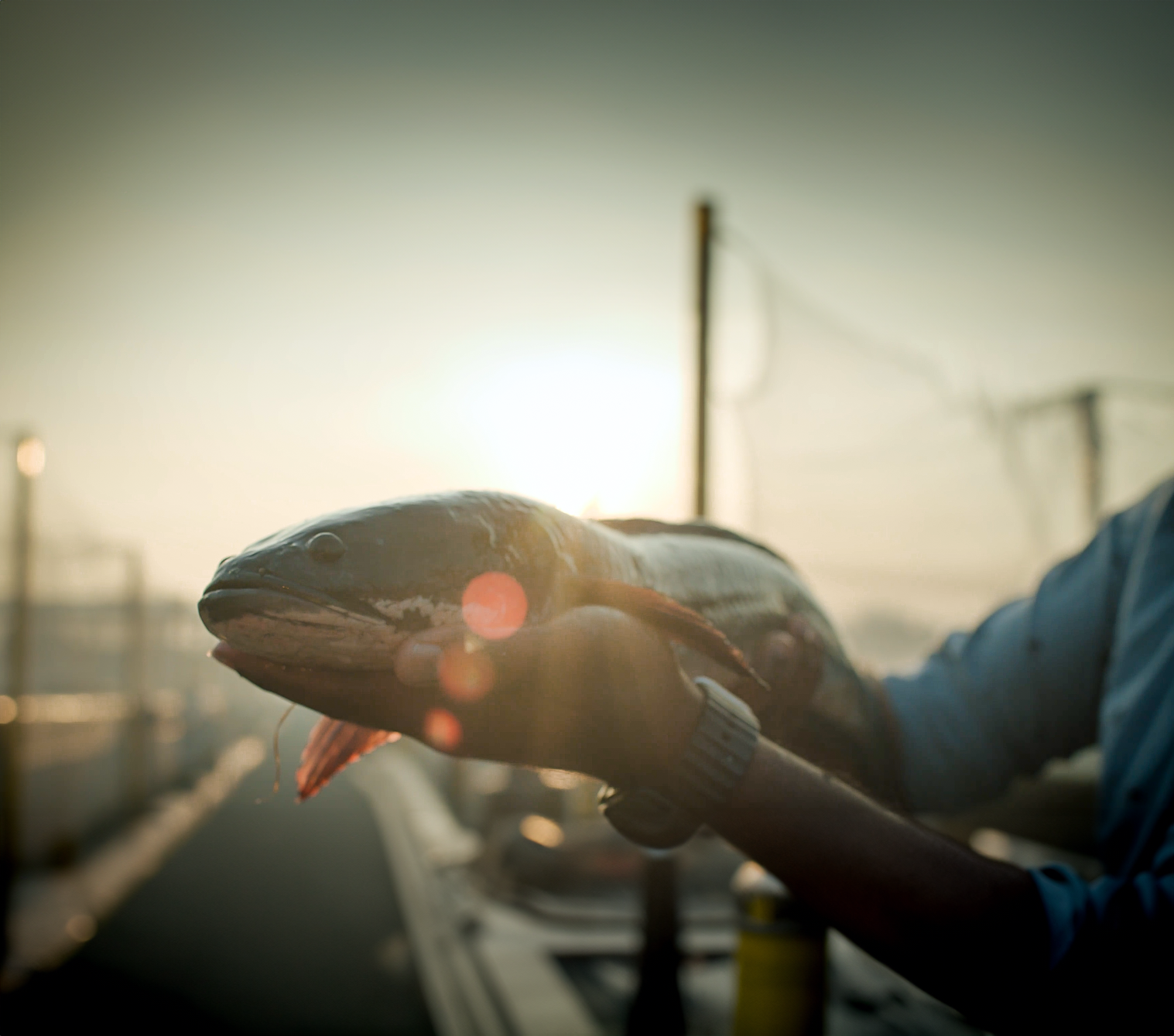
Murrel fish are known for their elongated body, large mouth, and distinctive pattern of dark vertical stripes on a light background, making them a visually striking species.
FAFPL incorporates advanced recirculation aquaculture systems (RAS) and tailored Israeli technology to create a sustainable and controlled environment for fish production.
As part of its sustainability practices, FAFPL uses technology that prevents the use of antibiotics and disease treatments, as well as water recycling to ensure nature-friendly practices.
By using advanced technology, FAFPL carefully manages water usage and recycles water with minimal loss, ensuring sustainable aquaculture.
The technology at FAFPL reduces the risk of disease contamination, minimizes water usage, and promotes a nature-friendly approach to fish production, addressing environmental concerns in aquaculture.
